Loading...

Loading...
0 ₴
0 ₴
WHAT WAS ACHIEVED
Over more than a year of the program, more than 110 visits have been carried out. A total of 368 individual sessions with patients at St. Nicholas Children's Hospital have been documented; individual and group work is also conducted with UNBROKEN patients.
The program currently involves 5 trained dogs and 4 handlers. Another 4 dogs and their handlers are undergoing training for future work with patients.
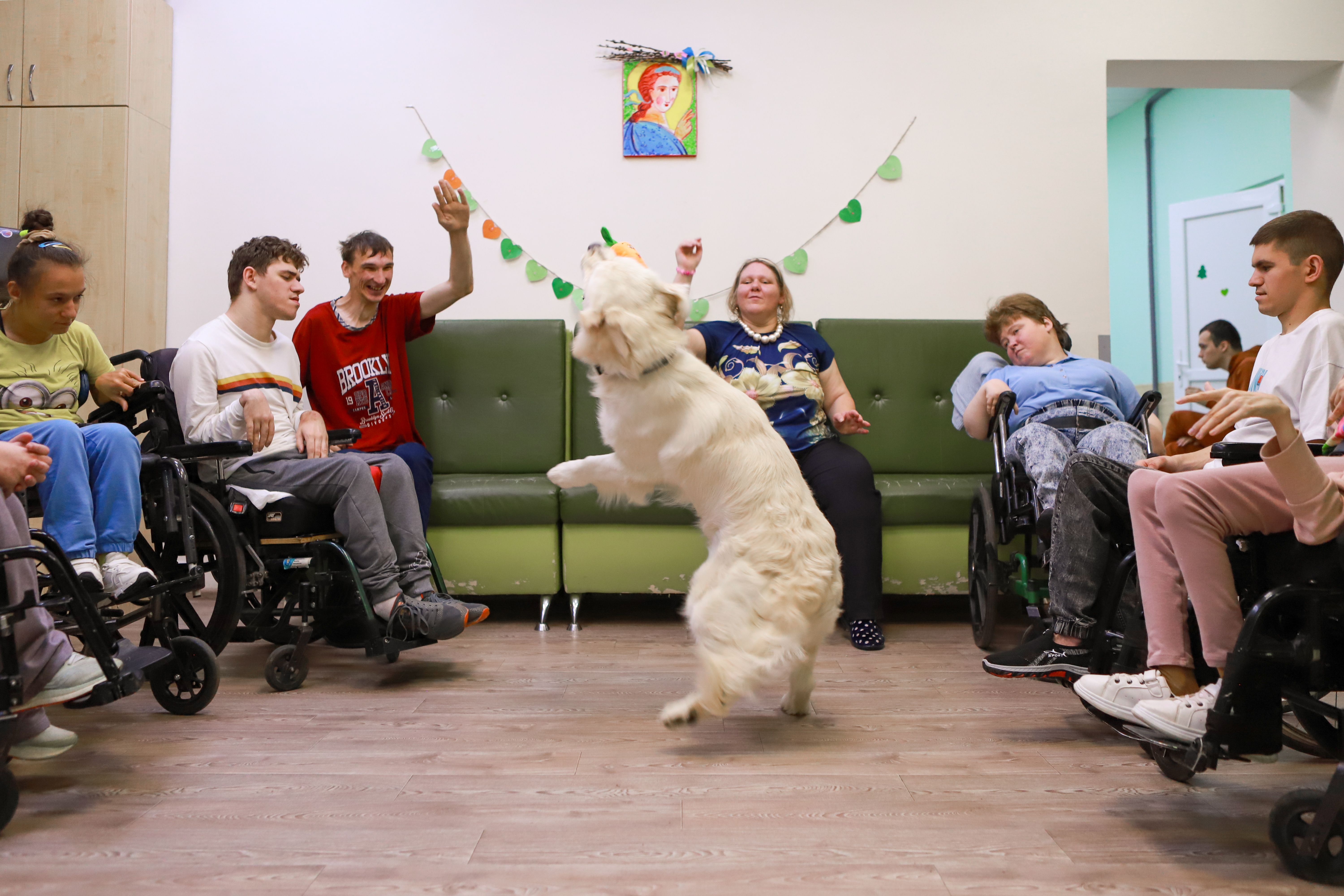
Interaction with a specially trained dog can serve as an additional tool in rehabilitation. Through movement, play, tasks, and direct interaction, canine-assisted therapy creates a more comfortable environment and helps engage patients in activities. Based on practitioners' observations, these practices may help reduce tension, support motivation, and create positive emotional experiences during prolonged treatment and recovery.
The canine-assisted therapy program in Lviv began in April 2025 with support from The Bridge of Life. The first team - handler Inna Doroniuk, an educator and early childhood development specialist with many years of experience in canine-assisted therapy, and golden retriever Alto - completed specialized training, passed theoretical and practical exams, underwent medical screening, and received certification before beginning work with patients.
When working with children, the dog can be directly involved in rehabilitation exercises: the child moves, plays, completes tasks, and interacts with the animal. The program works with patients at St. Nicholas Children's Hospital and UNBROKEN Kids, including children undergoing prolonged treatment and rehabilitation.
Canine-assisted therapy is also offered to adult UNBROKEN patients - military personnel and civilians. Individual and group sessions provide an additional space for interaction, emotional decompression, and positive experiences during recovery.
The program is delivered on a volunteer basis by specialists from the DOK Canine Center and Pet-Friendly NGO, with support from The Bridge of Life. It continues to grow: additional trained teams are already involved, while more dogs and handlers are currently in training.
